What is spirulina?
Spirulina – also known scientifically as Arthrospira platensis – is a tiny blue-green freshwater microalgae that is native to the alkaline waters of Mexico, Asia and South America. The algae first appeared around 3.5 billion years ago and is one of the oldest organisms in the world.
Spirulina has a long history of human consumption. Even the Aztecs valued this versatile microalgae: they harvested spirulina from Lake Texcoco, which now lies almost dry in the valley of what is now Mexico City. Back then, the dried algae was traditionally incorporated into soups and cakes. Today, the spirulina used in our products is mostly cultivated in specialised aquaculture facilities.
Aside from its historical significance, this microalgae has another trick up its sleeve: it naturally contains valuable plant-based protein.
What is the difference between blue and green spirulina?
This is always one of the first questions for people getting into spirulina. The answer lies in the processing and the natural pigments of the algae.
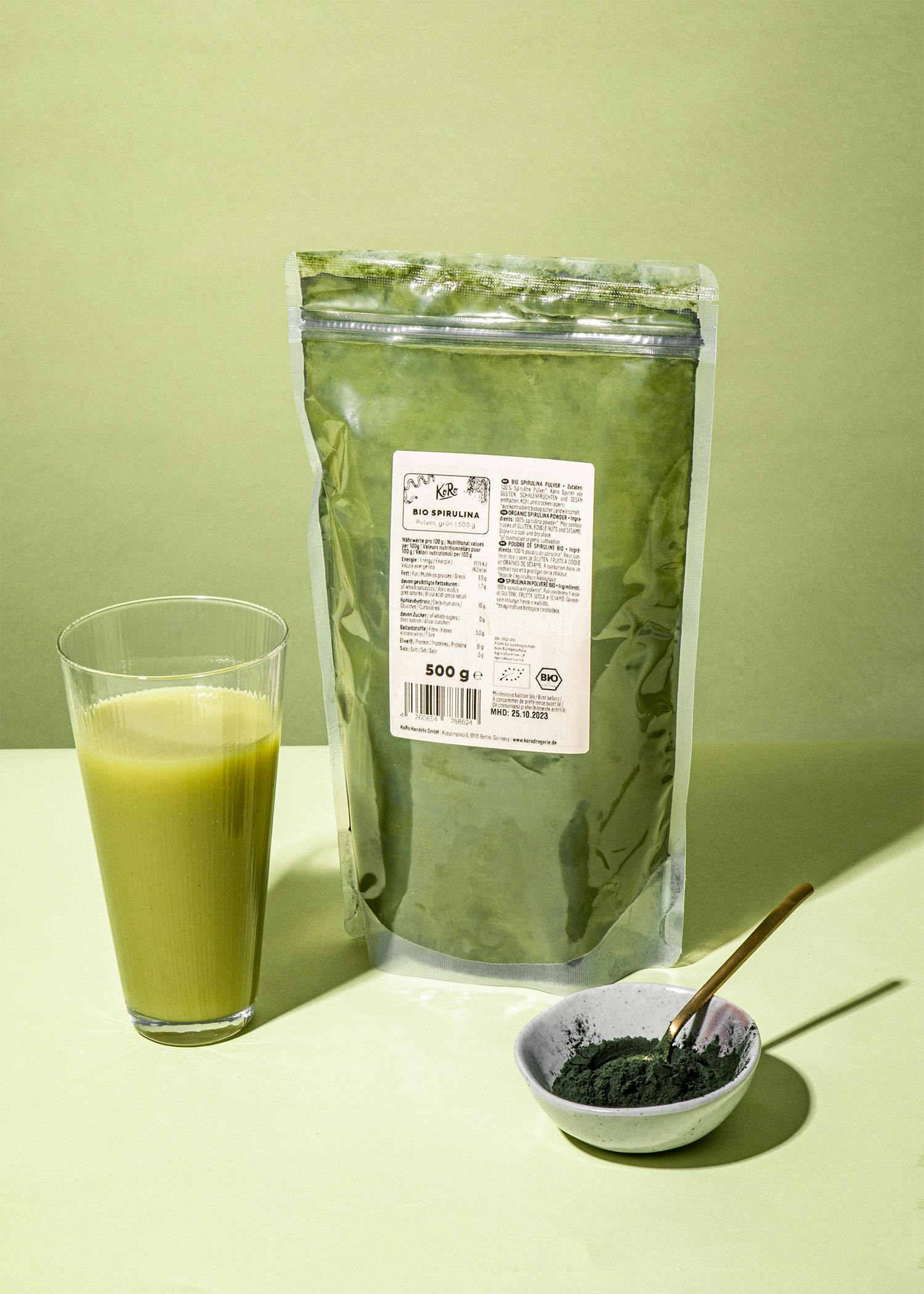
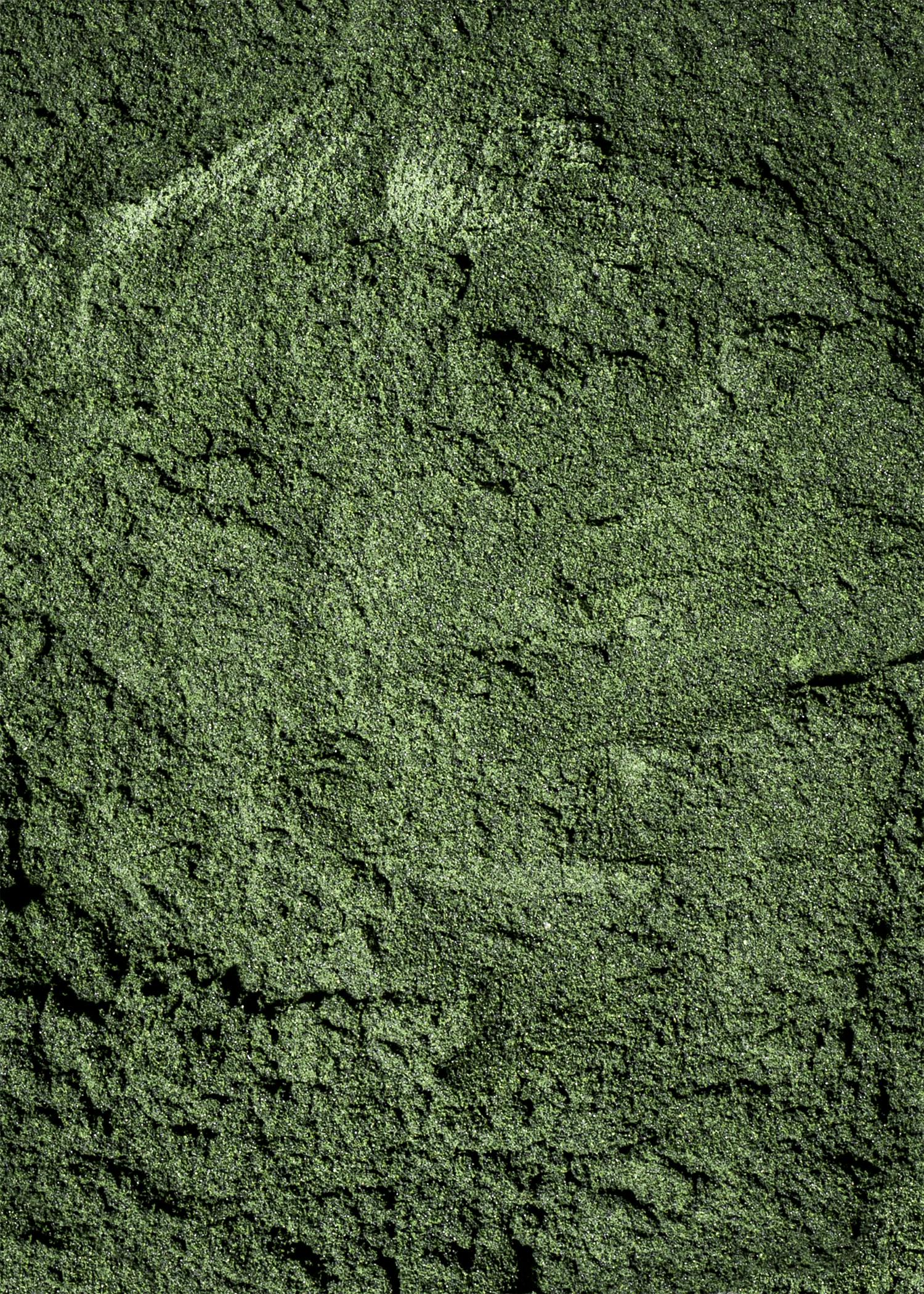
- Organic green spirulina powder: This is the natural, dried and ground powder of the whole algae. It contains all its original components, including the green plant pigment chlorophyll and the blue pigment phycocyanin. In terms of flavour, the green variety has an intensely savoury, slightly seaweed-like note. If you’re looking for a source of protein, you’ll find what you’re after in our organic spirulina powder: with 62g of protein per 100g, the green powder is ideal for supplementing your diet with plant-based protein.
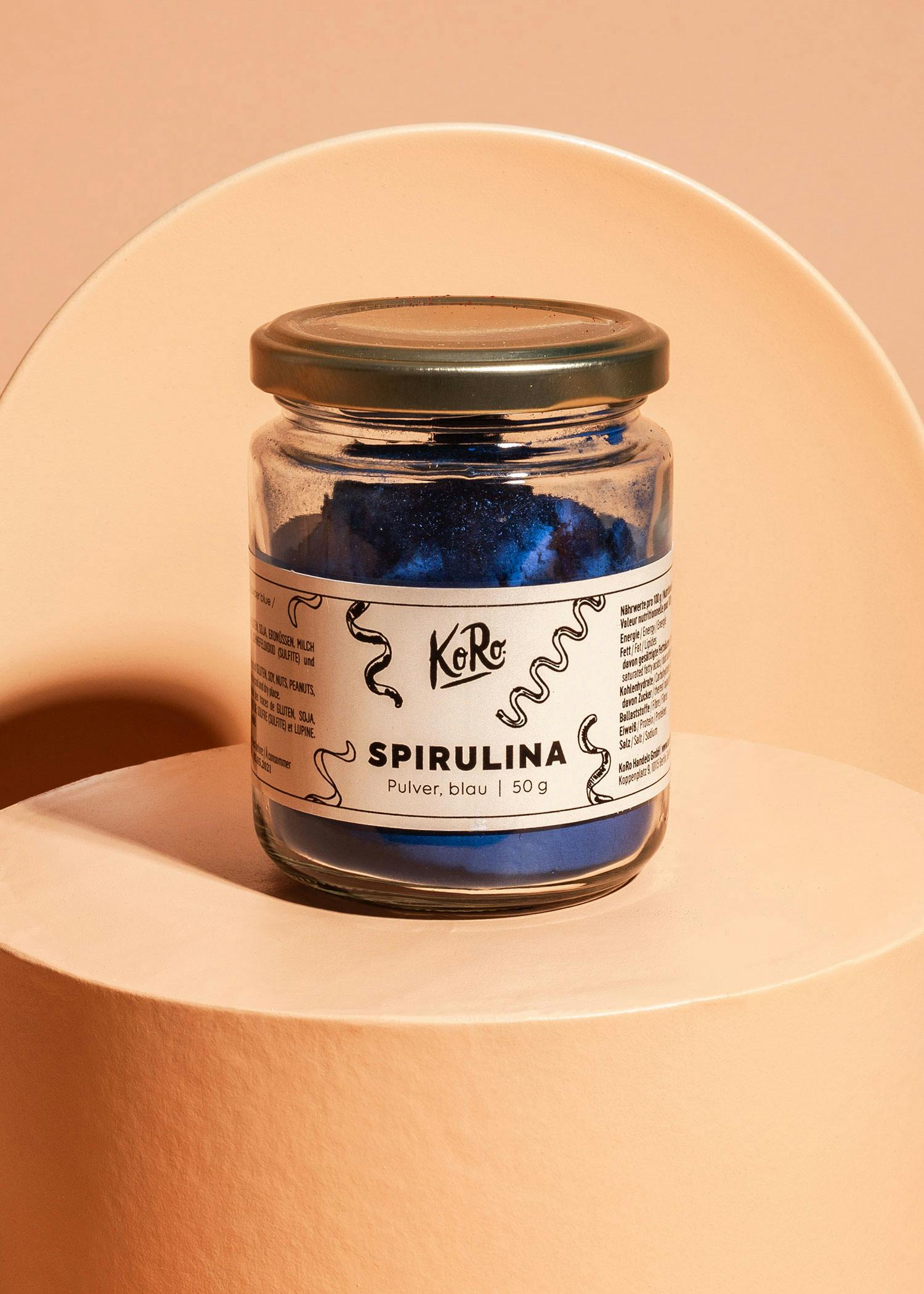
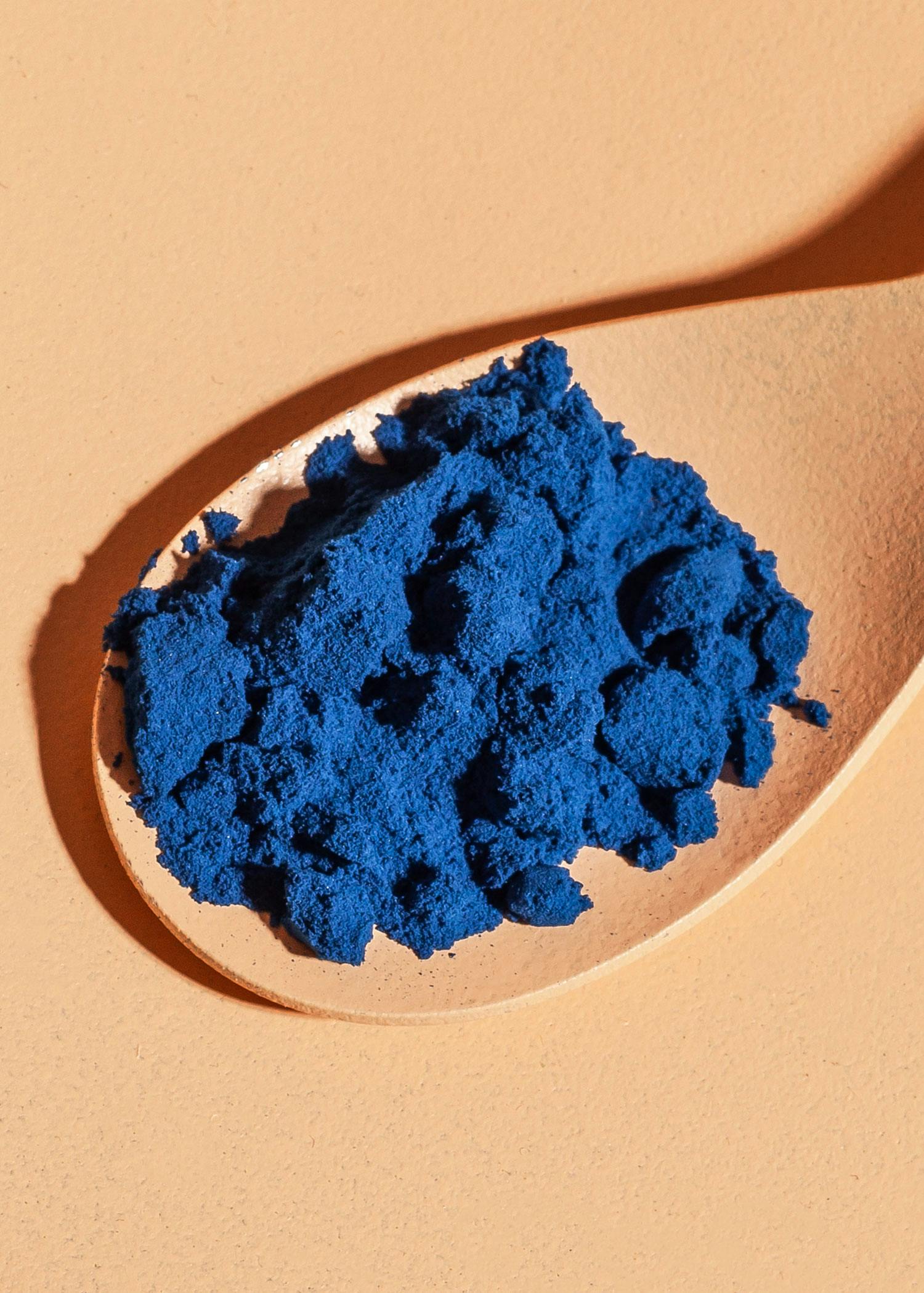
- Blue spirulina powder: This variety is derived from the same blue-green microalgae. In a complex process, the blue pigment phycocyanin is isolated and extracted. The result is an odourless powder with one unmistakable characteristic: a vibrant blue colour. As the characteristic algal flavour disappears during extraction, blue spirulina is ideal for sweet dishes without altering their taste. With 45g of protein per 100g, the blue powder is also high in protein and vegan. But bear in mind an important cooking tip: you shouldn’t heat dishes containing blue spirulina powder above 70 °C, as the colour will lose its vibrancy.
Powder or tablets: Which is best for my lifestyle?
At KoRo, you’ll find spirulina in various forms. Which option suits you best depends entirely on your habits.
- Spirulina powder is the ideal choice for creative cooks. The green or blue powder can be easily stirred into liquids. It’s perfect for mixing into juice, smoothies or your bowls
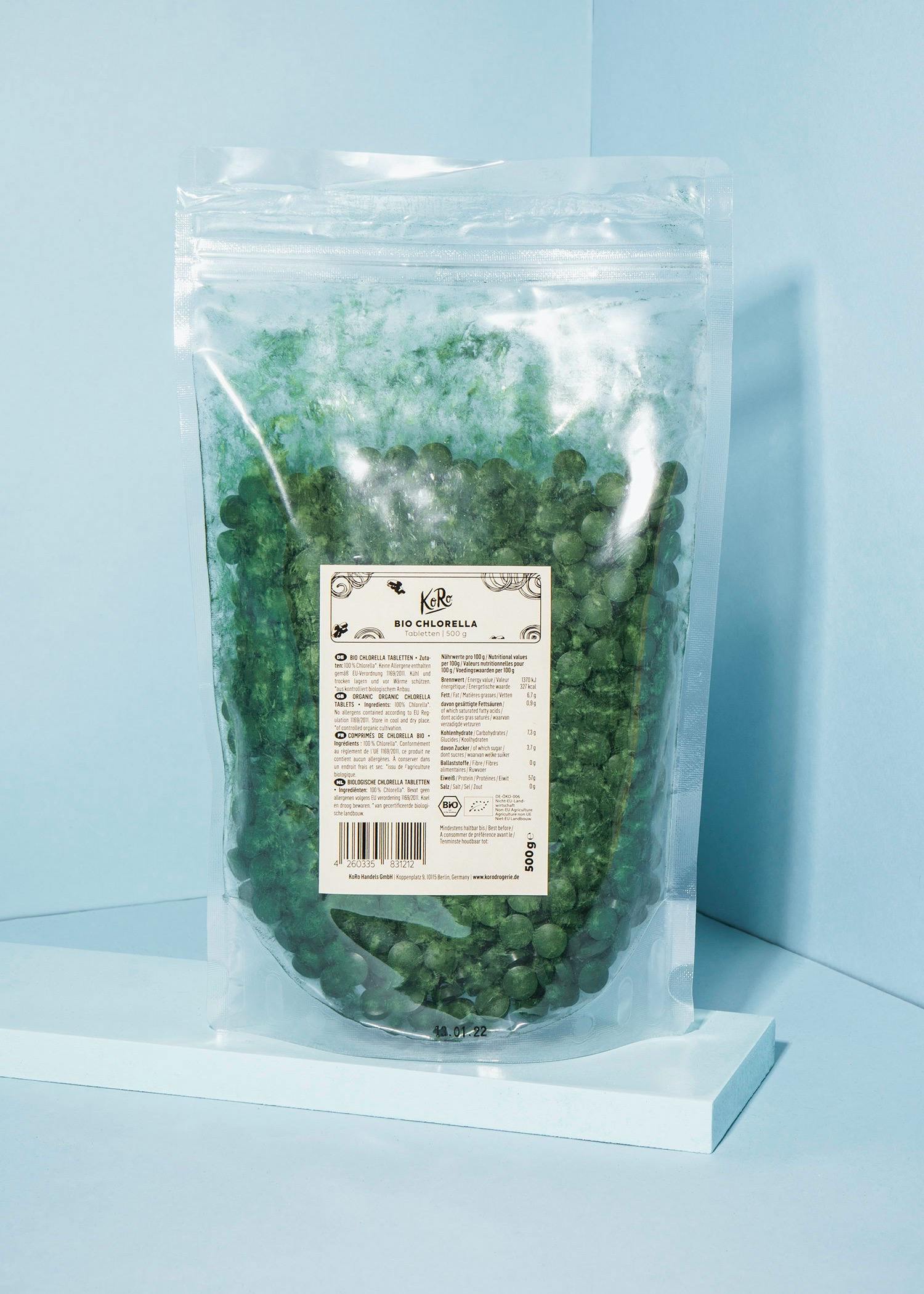
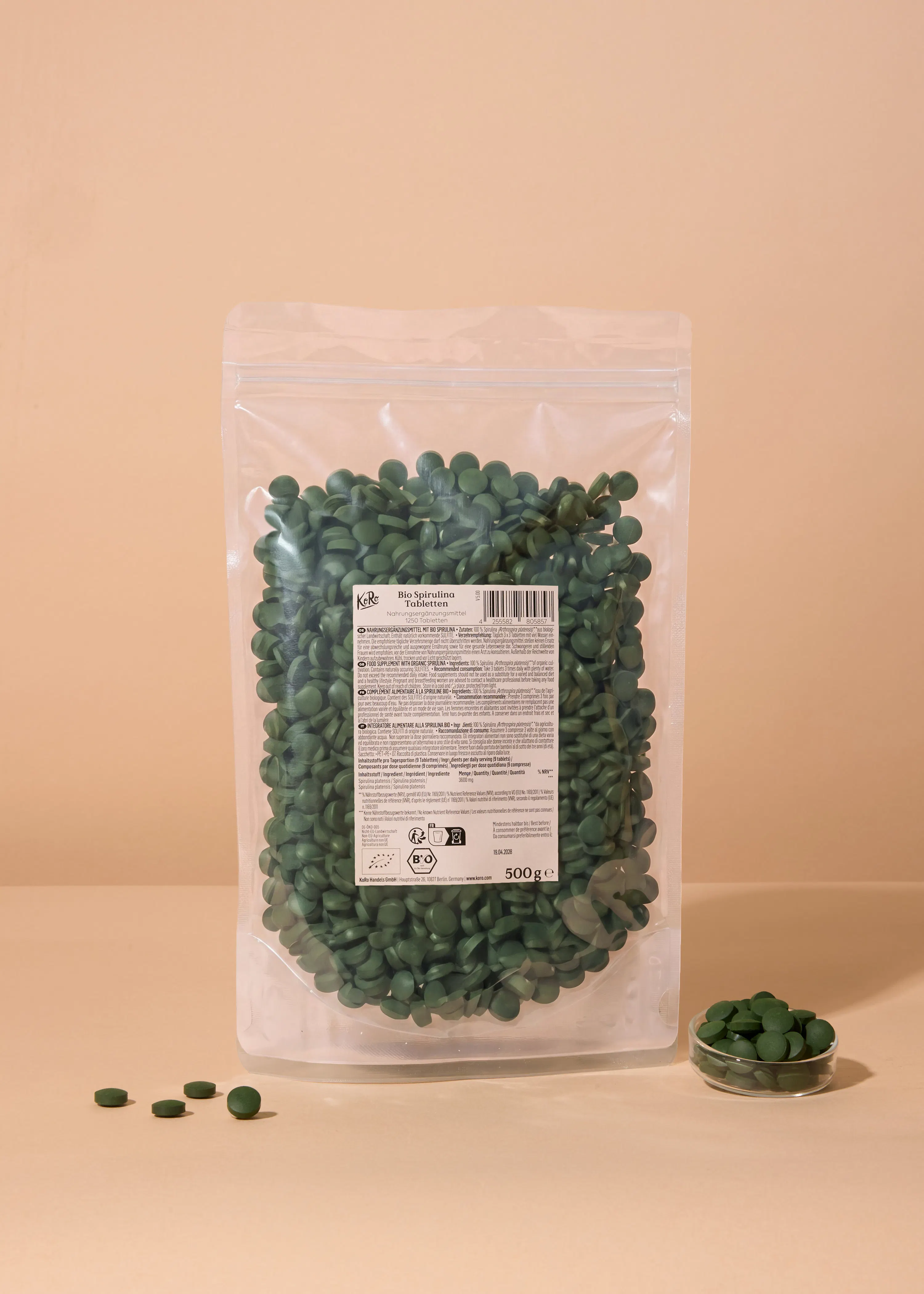
- If your goal is the efficient consumption of spirulina, our Organic spirulina tablets are the simple alternative. Our spirulina supplements consist of 100% pure algae. They’re easy to measure out and fit perfectly into your daily routine if you’re often on the go
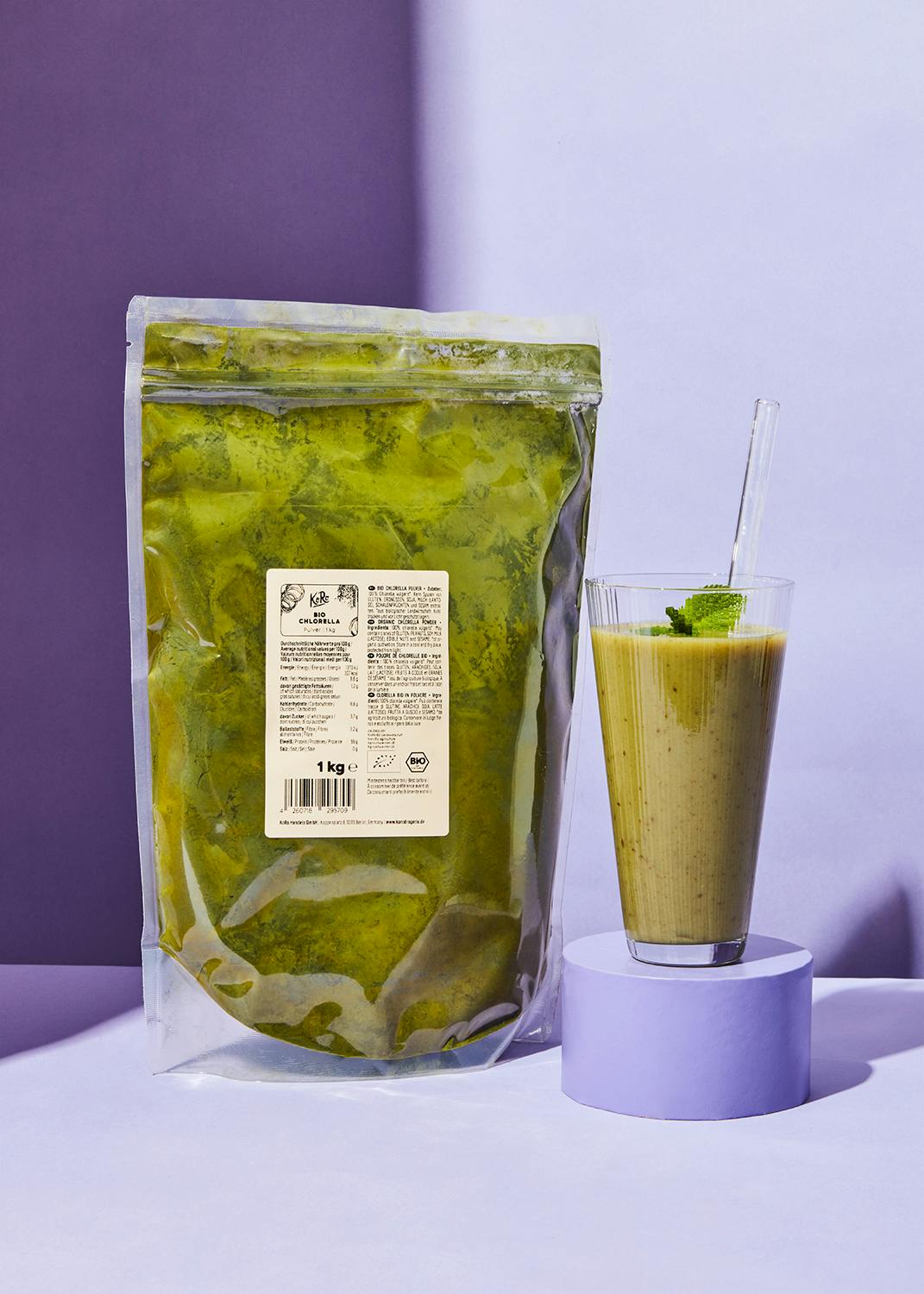
A quick tip: along with spirulina, there’s also the freshwater algae chlorella, which is frequently used as a dietary supplement – for example, in the form of our Organic clorella- tablets.
What should I consider when using spirulina?
Algae can act like tiny sponges, absorbing substances from their surroundings. High-quality growing conditions are therefore essential. When buying, be sure to look for quality-controlled and certified products. Our green spirulina powder and spirulina tablets are sourced from organic agriculture and are gently processed. They contain absolutely no artificial additives.
Inspiration for your dishes: Colourful recipes with spirulina
Fancy trying out these colourful algae straight away? We’ve put together a few delicious ideas for you. Be inspired and give your creations a bit of a boost:
- Blue spirulina lemonade (vegan & gluten-free): Made with lemon, sparkling water and blue spirulina, this lemonade is ready in just a few minutes and adds a fresh, natural splash of colour
- Blue spirulina coconut cloud: Coconut water, blue spirulina and a light, creamy foam combine to create a delicious drink that’s quick to make and stands out thanks to its unique appearance
- Spirulina smoothie bowl: Fresh fruit, green spirulina powder and coconut yoghurt make this bowl a simple breakfast idea for a colourful start to the day